The DCHHS Overdose Prevention and Response Team works to prevent overdose deaths and strengthen access to substance use and mental health resources throughout Dallas County. Through community education, overdose response and support, screenings and referrals, naloxone distribution and training, youth education, and collaboration with community partners, we work to reduce barriers to care and connect individuals and communities with the resources they need.
Overdose Response and Naloxone (Narcan®) Training
Dallas County Health and Human Services (DCHHS) offers overdose response and naloxone training for healthcare providers, community organizations, businesses, families, community members, and more. These trainings provide participants with the knowledge and skills needed to recognize and respond to an opioid overdose and potentially save a life.
Using evidence-based education and hands-on instruction, participants learn how to identify the signs of an opioid overdose, properly administer naloxone, and take appropriate action until emergency medical services arrive.
Training topics include:
- Understanding opioids and overdose risks
- Recognizing the signs and symptoms of an opioid overdose
- Proper administration of naloxone (Narcan)
- Emergency response procedures and aftercare
- Available community resources and support services
Monthly Trainings
DCHHS hosts monthly overdose prevention and naloxone administration trainings at our office. These trainings are intended for community members, organizations, and anyone who wants to learn more about overdose prevention and response. View the schedule below to sign up for a training.
Trainings for Businesses/Organizations
DCHHS is providing free naloxone to businesses and organizations within Dallas County upon completion of the provided training to support the prevention of opioid overdose deaths. We are offering this training to local businesses and community organizations including restaurants, bars, homeless shelters, libraries, recreational centers, and more. If your organization is interested in receiving a training, please complete the form below.
Click the image below to view a larger version.
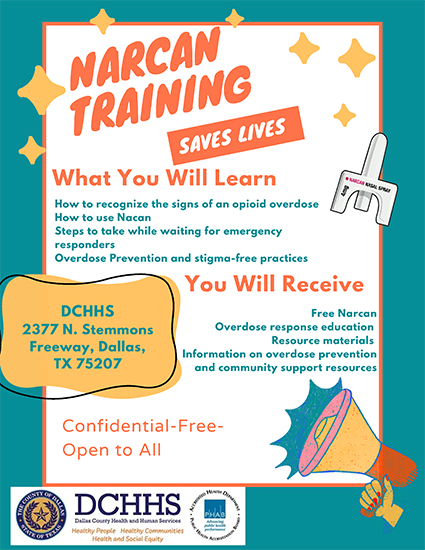
DCHHS Naloxone Training.
Find Naloxone Near You
There are several locations that offer free naloxone around Dallas County.
Naloxone Saturation in Dallas County
DCHHS is committed to increasing naloxone saturation across the county. Through targeted community outreach, we work to place naloxone directly in the hands of our community members at restaurants, bars, hotels/motels, schools, churches, and several other organizations. Using local overdose data to guide our efforts, we focus on areas with the greatest need to expand access, reduce barriers, and help prevent overdose deaths in Dallas County.
DCHHS and local Community-Based Organizations are working together to ensure naloxone is accessible throughout the county.
Public Health Vending Machines
DCHHS placed Public Health Vending Machines throughout the county to increase access to free health and wellness resources. These machines provide naloxone to reduce overdose deaths and other essential items that help prevent disease and connect community members with tools that support healthier lives.
Naloxone Storage Devices
DCHHS offers a variety of naloxone storage devices to help community organizations make this life-saving medication readily available. Designed for placement in high-traffic and easily accessible locations, these storage devices allow organizations to quickly respond to an overdose. DCHHS has partnered with several businesses, community organizations, and other public spaces to expand access to naloxone and create a safer community.
Click the image below to view a larger version.
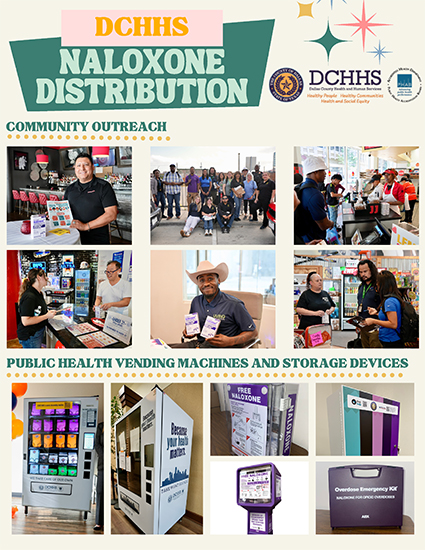
DCHHS Naloxone Distribution.
Youth Substance Use Education, Training, and Mental Health Support
DCHHS empowers youth through education, training, and support that promote healthy decision-making and overall well-being. Using evidence-based information and interactive learning experiences, DCHHS helps young people understand the risks of substance use, strengthen protective factors, and build the skills needed to support positive mental health. Our programs provide youth with the knowledge, confidence, and resources to make informed choices, develop healthy coping strategies, and thrive in their homes, schools, and communities.
Our services include:
- Substance Use Prevention Education – Evidence-based presentations and workshops that increase awareness of the risks associated with opioids, alcohol, tobacco, vaping, marijuana, prescription drug misuse, and other substances.
- Youth Prevention Trainings – Interactive trainings/presentations that help youth develop refusal skills, coping strategies, peer resistance techniques, and healthy decision-making skills to reduce risky behaviors.
- Mental Health Awareness and Support – Education that helps youth recognize the signs of stress, anxiety, depression, and other mental health concerns while encouraging positive coping mechanisms and help-seeking behaviors.
- Resilience and Protective Factors Development – Programs that promote self-esteem, emotional wellness, problem-solving skills, and healthy relationships to support long-term mental and behavioral health.
- Community and School-Based Outreach – Collaboration with schools, community organizations, and youth-serving agencies to provide accessible prevention education and mental health resources.
Through these efforts, DCHHS works to reduce substance use among youth, increase awareness of mental health resources, and foster healthier, safer communities where young people can thrive.
Click the image below to view a larger version.
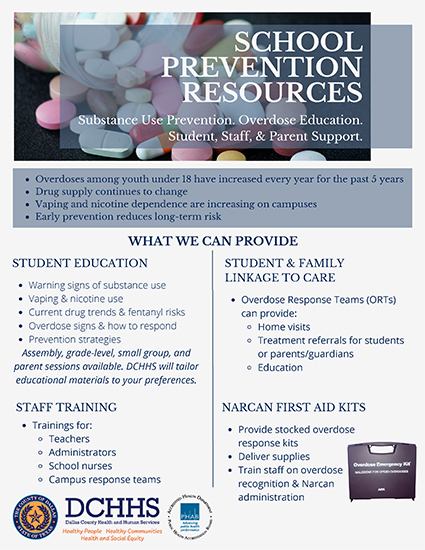
DCHHS OPR Services for Schools.
Who are we:
The DCHHS Overdose Response Team (ORT) provides follow-up and support to individuals who have recently experienced a suspected overdose or are at increased risk. The team consists of public health nurses and peer support specialists who conduct home visits to connect clients with harm reduction resources, healthcare services, and community-based support. This form is intended for partner agencies (e.g., schools, hospitals, shelters, or other community organizations) to refer individuals to the DCHHS ORT for outreach and assistance.
Services:
- Basic medical screenings and health assessments
- Information and guidance on treatment options and recovery pathways
- Connections to mental health care, substance use programs, and recovery resources
- Assistance with transportation to and from treatment services
- Free naloxone (Narcan) and hands-on training on how to use it
- CPR education and training
- Support and resources for individuals and their families
Eligibility:
- Available to any Dallas County resident at risk of an overdose, whether or not an overdose has already occurred.
- Open to individuals experiencing substance use challenges involving drugs or alcohol.
- Referrals can come from anyone — including family members, schools, healthcare providers, or community organizations.
- All services are free and provided by a compassionate team of nurses and peer support specialists.
Partner Cities:
- Garland
- Farmers Branch
- Richardson
- Irving
- Carrollton
- Lancaster
- Grand Prairie
Take the first step:
Questions or want to refer someone? Contact us via email at ORT@dallascounty.org. You can also click the link below to complete the referral form.
Click the image below to view a larger version.
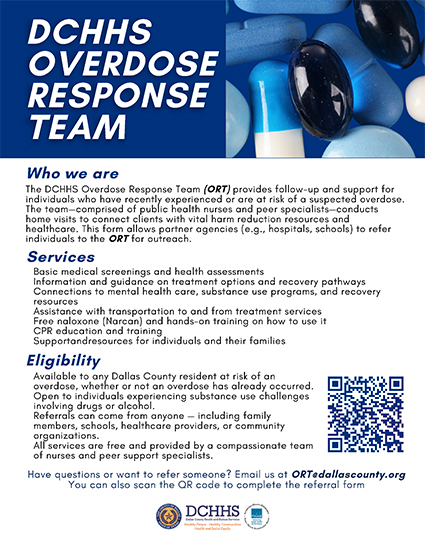
DCHHS Overdose Response Team.
DCHHS can provide mental health and substance use disorder screenings to identify participant’s behavioral health needs and inform appropriate treatment and referral decisions. Screening results guide individualized treatment planning, determine the appropriate level of care, and connect participants with appropriate behavioral health and community-based services.
- Screening will be completed upon intake.
- Screening tools include a psychosocial assessment and needs assessment.
- Assessment results will be used to create individualized treatment plans and determine the appropriate level of care.
- Based on screening results, referrals to appropriate providers and supportive services will be made.
Click the image below to view a larger version.
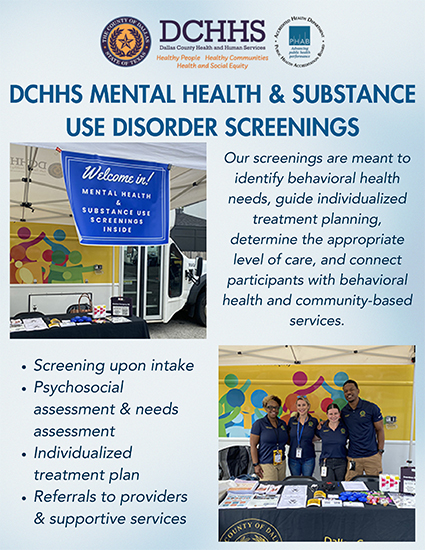
DCHHS Mental Health and Substance Use Disorder Screenings.
The Dallas County Opioid Task Force brings together healthcare providers, community organizations, first responders, government agencies, academic institutions, and individuals with lived experience to collaboratively address substance use and overdose in Dallas County. Through coordinated planning, resource sharing, and evidence-based strategies, the Task Force works to strengthen prevention, expand access to treatment and recovery supports, reduce overdose deaths, and improve health outcomes across the community.
The Task Force provides opportunities to:
- Collaborate with multidisciplinary partners to address substance use and overdose.
- Share resources, best practices, and emerging trends.
- Learn from local data, surveillance findings, and subject matter experts.
- Participate in action-oriented meetings, workshops, and collaborative initiatives.
- Identify and address system-level gaps and barriers to care.
- Support the implementation of evidence-based overdose prevention strategies.
- Build partnerships that improve coordination across healthcare, public health, behavioral health, public safety, and community organizations.
- Stay informed about local overdose prevention initiatives, funding opportunities, and community resources.
Who should participate?
The Task Force welcomes organizations and individuals committed to preventing overdose and improving outcomes for people affected by substance use, including:
- Healthcare and behavioral health providers
- Hospitals and Federally Qualified Health Centers
- Emergency medical services, fire, and law enforcement
- Community- and faith-based organizations
- Recovery support organizations
- Local governments and public health agencies
- Academic and research institutions
- Individuals with lived and living experience and family members
Connect:




-
You must be on the network to see these links.
© 2026. Dallas County. All rights reserved.
